Locks and Dams of the Upper Mississippi
The staircase of water your boat climbs between St. Louis and St. Paul.
Get Upper Mississippi QuotesWhy the Upper Mississippi Has Locks
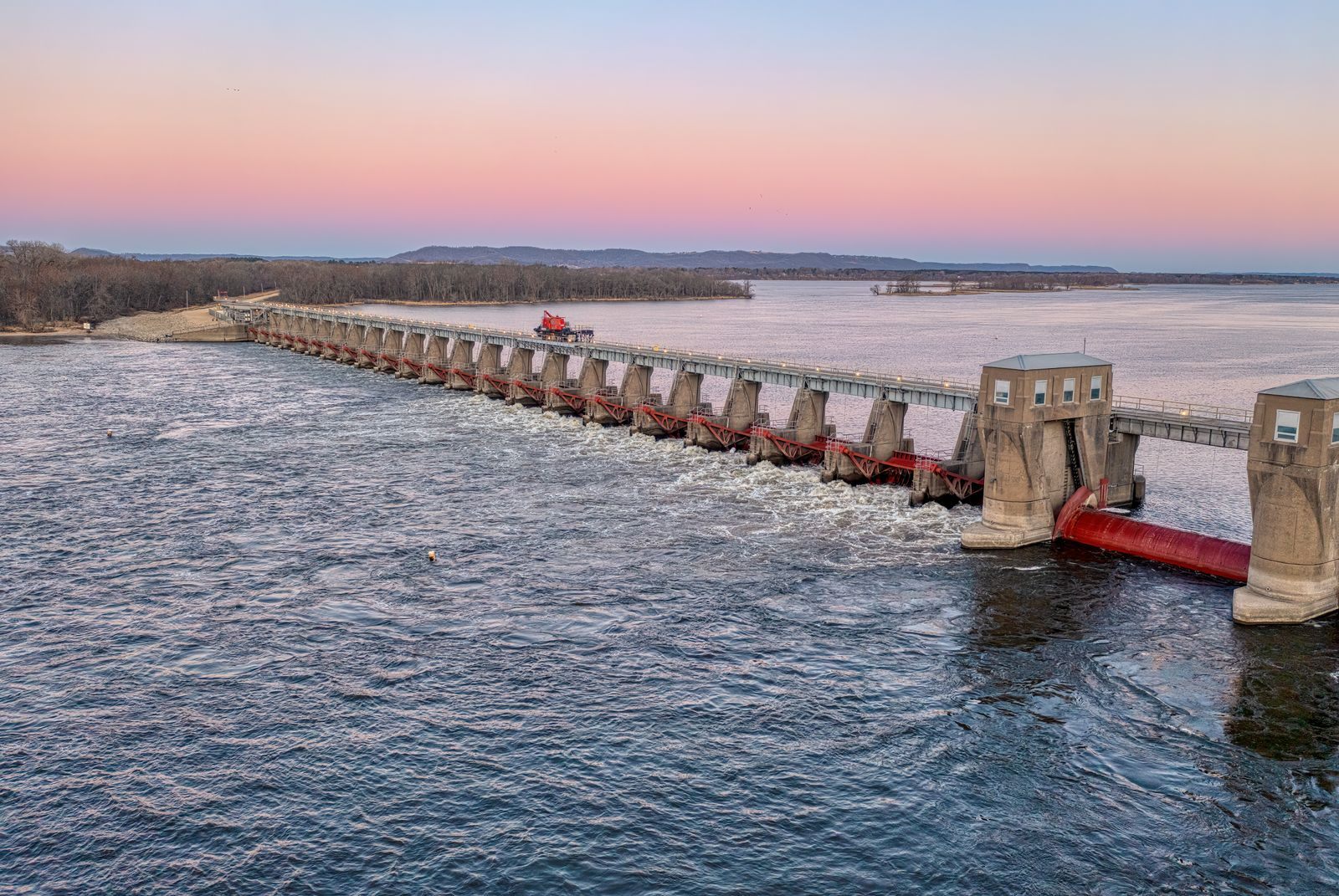
Before the 1930s the upper river was shallow and full of rapids in dry seasons. Congress approved a nine-foot navigation channel, and the Corps of Engineers built a chain of locks and dams between the Twin Cities and the St. Louis area, most of them between 1930 and 1940. The dams hold back long pools; the locks lift and lower boats from one pool to the next.
Each lock is numbered, and the standard chamber is 110 feet wide and 600 feet long. The St. Paul District of the U.S. Army Corps of Engineers runs the northern locks; the St. Louis and Rock Island districts run the rest.
What Happens in the Chamber
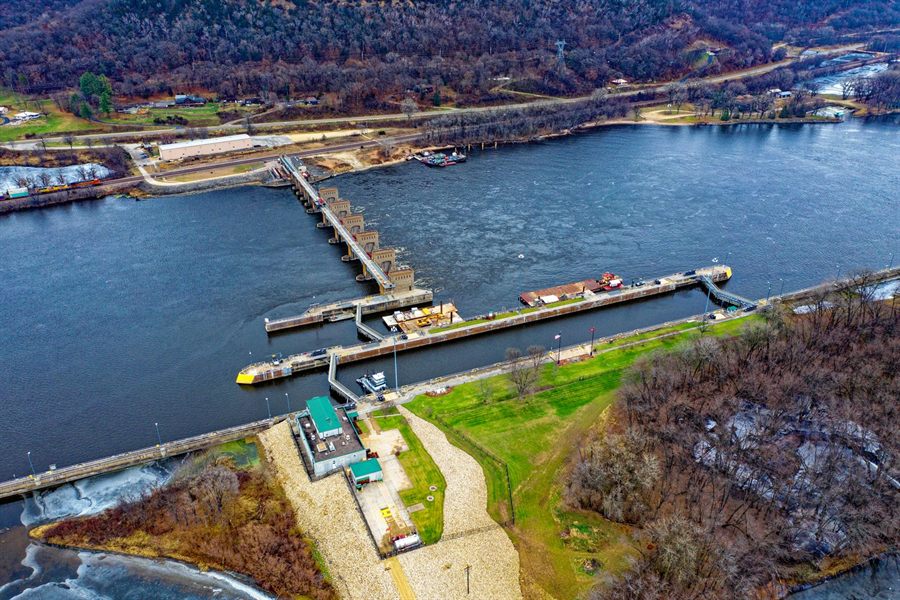
Your boat slows, lines up and glides into the chamber. Deckhands secure lines, the gates swing shut behind you, and valves let water in or out. Over several minutes the boat rises or sinks, sometimes by just a few feet and sometimes much more, until the water matches the next pool. The upstream gates open and you sail on.
Lock staff often wave from the walls, and some locks have public overlooks where townspeople come to watch the riverboats pass.
Pools, Islands and Wildlife
The pools created by the dams flooded old channels and low ground, leaving a maze of islands, backwaters and marshes. Much of that land is now protected as wildlife refuge, which is why the upper river is so rich in birds. Bald eagles gather below the dams in colder months, where the turbulent water stays open and fish are easy to catch; the National Eagle Center at Wabasha, Minnesota, explains their story.
Barge traffic shares the locks with you, mostly grain moving south. Watching a tow of barges maneuver into a lock is a lesson in seamanship, and it explains why passenger schedules include some slack.
A Working River
The locks were built for commerce, and they still carry it. Grain from Midwestern farms moves south in barge tows toward export terminals near New Orleans, and fertilizer, fuel and building materials come north. A single towboat can push a raft of barges carrying as much as a long freight train. Passenger riverboats wait their turn with everyone else, so a cruise schedule always allows some time for traffic at the locks.
Frequently Asked Questions
How long does it take to pass through a lock?
For a passenger boat the lockage itself is fairly quick, but waits are longer when barge tows are ahead. Big commercial tows are often longer than the standard 600-foot chamber and have to be split and locked through in two halves.
Can I watch from the deck?
Yes, and it is one of the highlights. Stand at the bow or rail to see the gates close and the water rise or fall around you.
Do boats lock through at night?
River traffic moves day and night, so some passages happen while you sleep. The cruise director usually announces the daytime locks so you can watch.
See the Locks for Yourself
Our cruise advisors at Mister Cruise will find an Upper Mississippi sailing with daytime lock passages and send free quotes.
Get Free Quotes